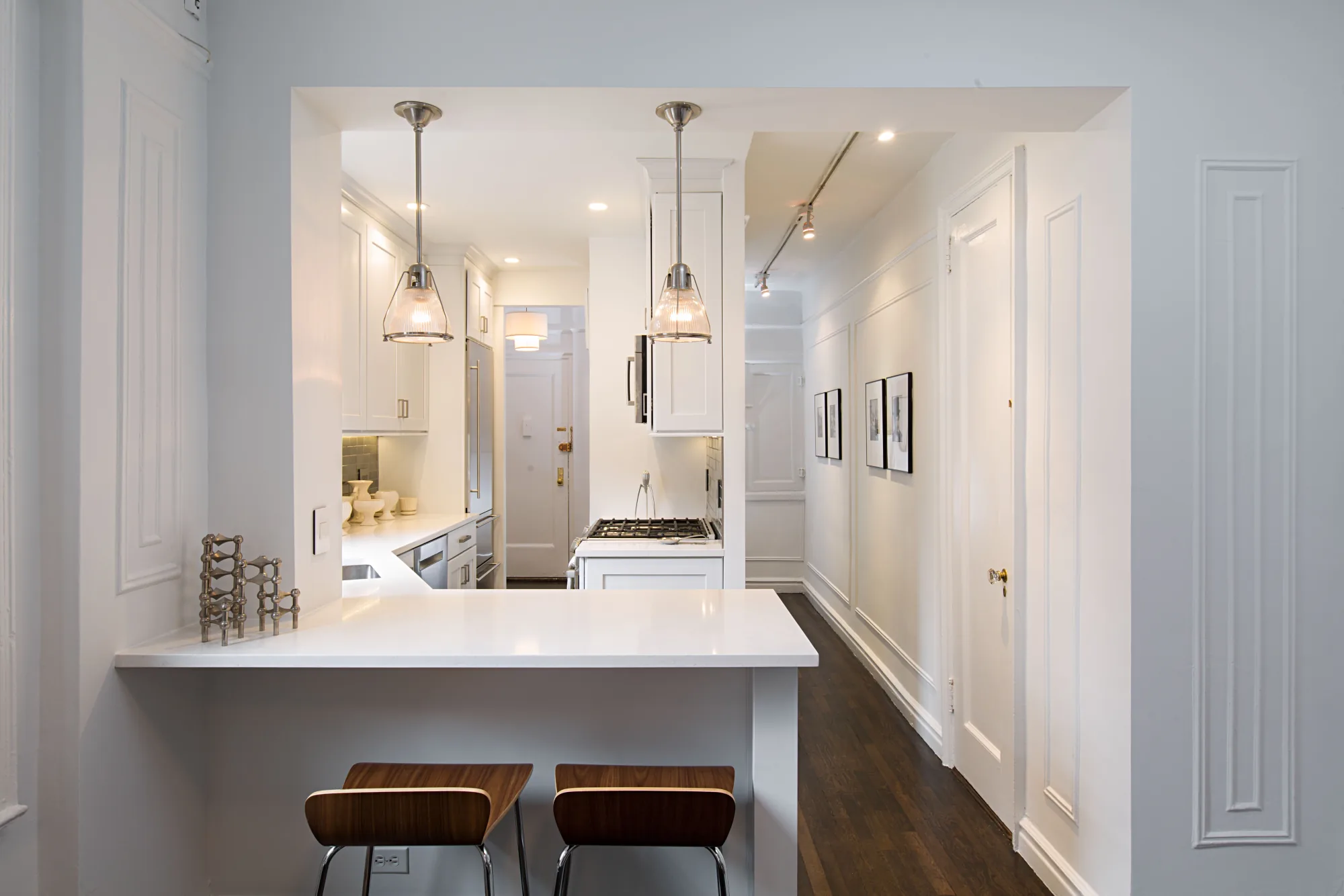
A luxury kitchen renovation in New York City is defined less by a single price tag than by the quality of three things: custom cabinetry built to the millimeter for the space, natural stone or premium engineered surfaces, and professional-grade appliances integrated seamlessly into the design. In Manhattan and Brooklyn, where kitchens are often compact and buildings impose real constraints, true luxury is making every inch work beautifully — not simply spending more. A high-end kitchen renovation here generally ranges from about $75,000 to $200,000 or more, and this guide explains exactly where that investment goes.
Cabinetry: The Foundation of a High-End Kitchen
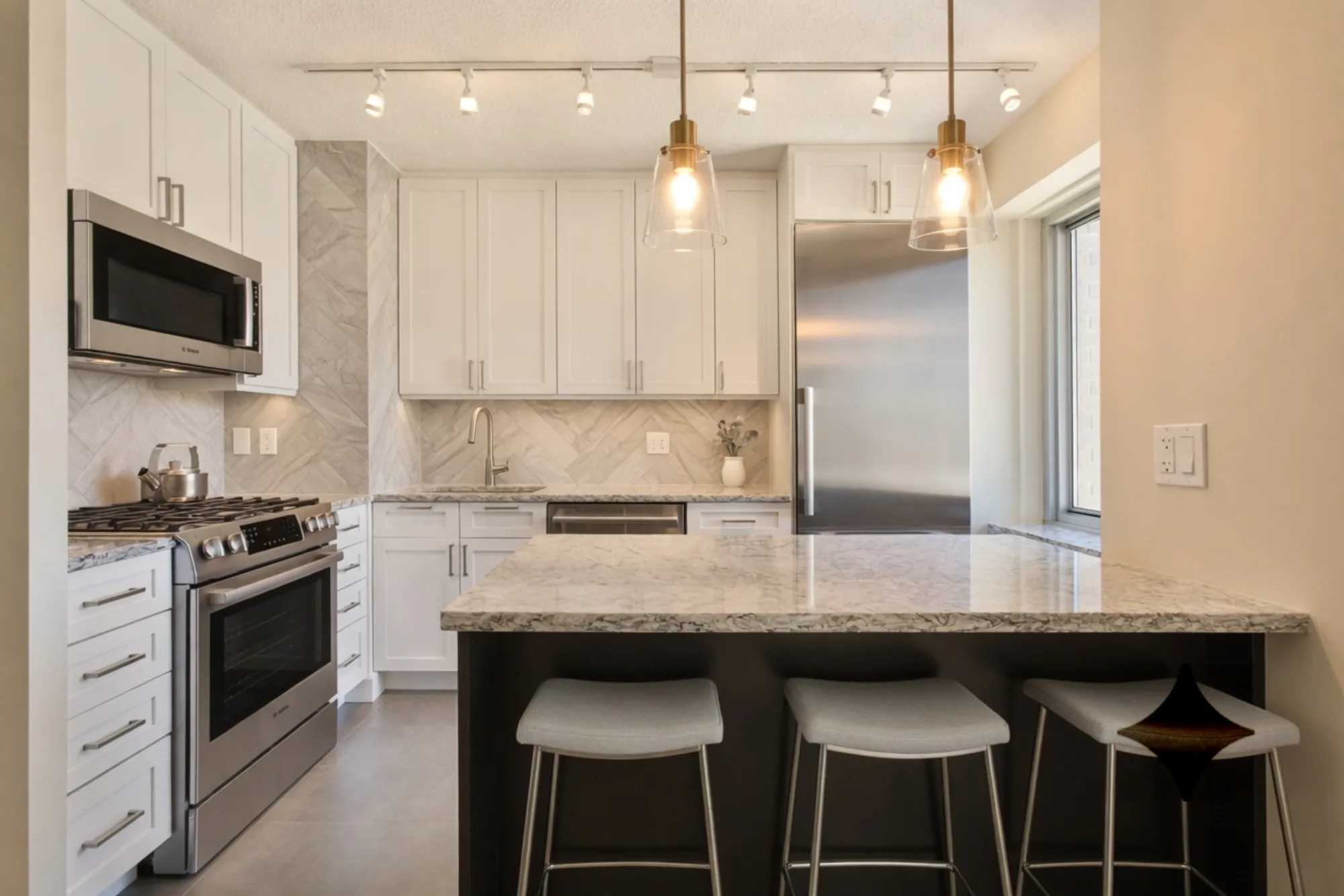
Cabinetry is the largest single element in a kitchen, the most visible, and the clearest dividing line between mid-range and luxury. The premium tier is custom cabinetry — built to the exact dimensions of your room rather than assembled from stock sizes. In a small NYC kitchen, this is where luxury is felt most: ceiling-height uppers that use every vertical inch, tailored fillers that eliminate dead gaps, toe-kick drawers, and interior fittings designed around how you actually cook.
The detail that most signals a high-end kitchen is inset construction, where doors and drawer fronts sit flush within the cabinet face rather than overlaying it. Inset work demands precise installation and a perfectly square room — exacting in a century-old prewar apartment, which is part of why it reads as luxury. Paired with solid hardwood drawer boxes, soft-close hardware, and a hand-applied finish, custom cabinetry is the backbone of the entire design.
Countertops and Surfaces
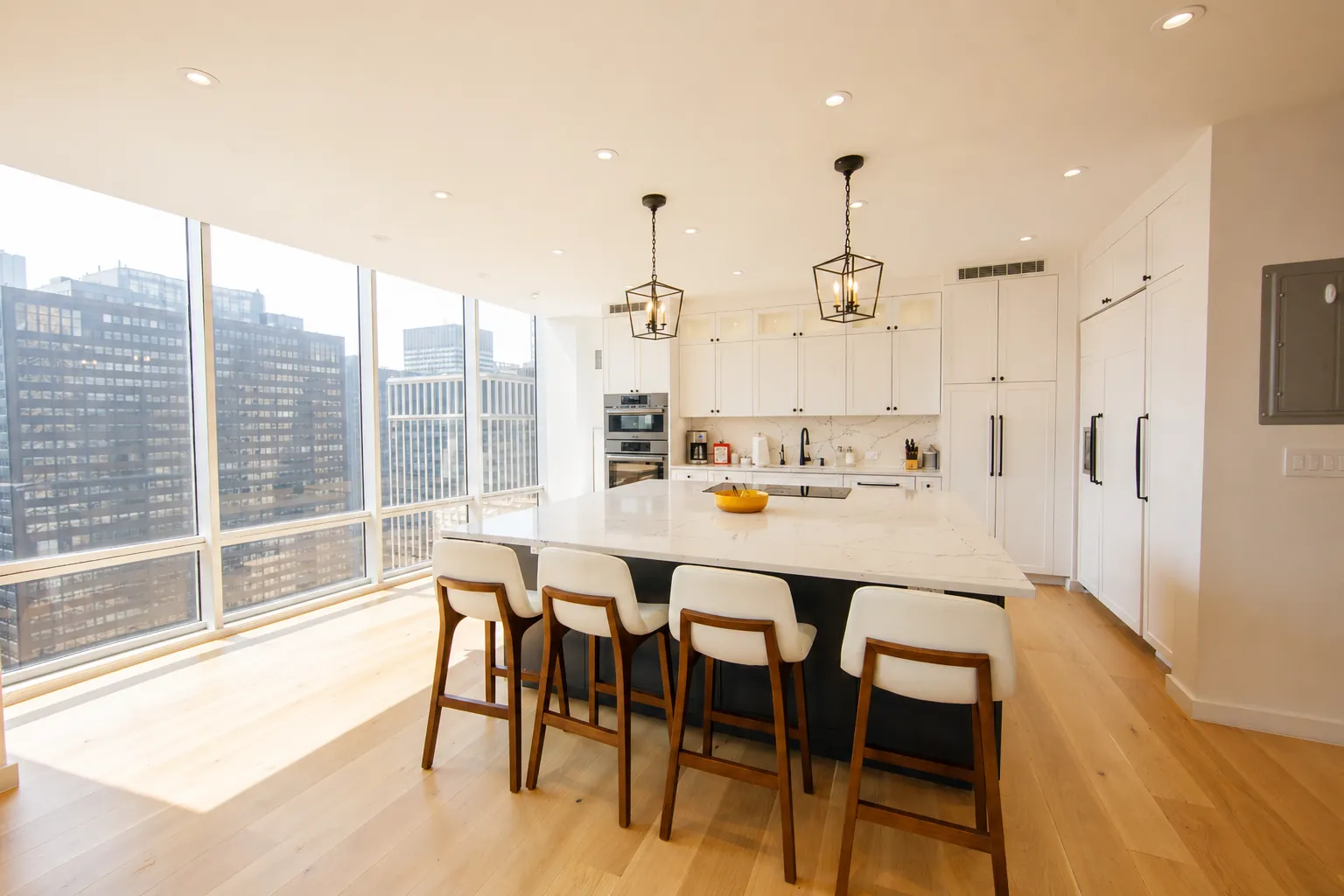
Stone is the jewelry of the kitchen, and the choice involves a genuine trade-off between beauty and maintenance:
- Quartzite has become the most-requested premium surface in our NYC kitchens. A natural stone with the veined look of marble, it is considerably harder and far more resistant to staining and etching.
- Marble — Calacatta, Carrara, Statuario — remains the classic luxury surface and the most beautiful, but it is porous and acid-sensitive, so it requires periodic sealing and will patina over time. Many clients love that lived-in character; others prefer the lower maintenance of quartzite.
- Large-format porcelain slabs deliver a nearly seamless look, outstanding durability, and convincing stone visuals — and they can run up walls and across waterfall edges without the weight of natural stone.
- Engineered quartz is the lowest-maintenance premium option, non-porous and consistent, ideal for clients who want a flawless surface with no sealing.
Whichever you choose, the material's behavior in NYC's hard-water environment matters — a consideration we explore in our guide to selecting tile and stone for NYC homes.
Appliances Worth the Investment
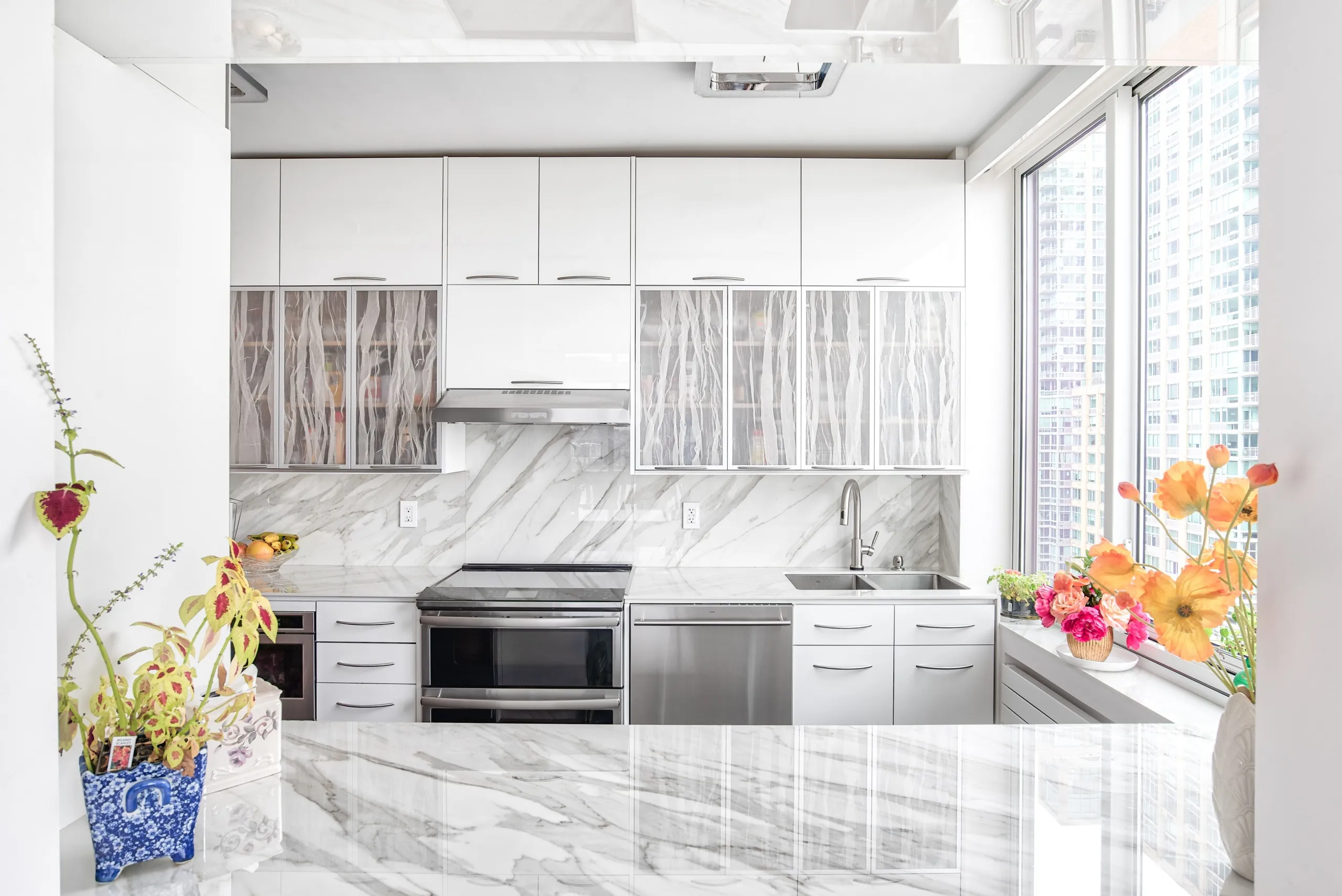
A luxury kitchen is anchored by a professional appliance suite, and in NYC the integration of those appliances matters as much as the brands. Refrigeration from Sub-Zero, ranges and cooktops from Wolf, and fully integrated dishwashers and ovens from Miele or Gaggenau are the names we specify most. The luxury detail is panel-ready integration — refrigerators and dishwashers clad in cabinetry panels so they disappear into the millwork, and a counter-depth, flush installation that keeps sightlines clean.
One NYC-specific caution: confirm electrical and gas capacity early. Professional ranges and induction cooktops can require dedicated circuits or a service upgrade, and gas work now involves mandatory pressure testing and utility coordination that can affect your schedule. We verify building capacity during design so there are no surprises at rough-in.
Layout: Making a Compact NYC Kitchen Feel Like a Luxury Kitchen
The defining challenge of an NYC kitchen is space. The luxury solution is rarely just "more square footage" — it is a smarter plan. Opening a galley kitchen to an adjacent dining or living area, where the building's structure allows, transforms how a compact apartment lives; we cover the structural and approval realities of that move in our guide to open-concept living in NYC apartments. Where a wall must stay, a pass-through, a peninsula with seating, or a slim island can deliver the same sense of openness.
Inside the cabinetry, luxury is in the engineering: full-extension drawers for pots rather than deep base shelves, a pantry wall that consolidates storage, appliance garages that keep counters clear, and a dedicated spot for everything. In a 90-square-foot Manhattan kitchen, that level of planning is what makes the space feel generous.
Ventilation, Lighting, and the Details That Separate Tiers
Two systems quietly distinguish a high-end kitchen. The first is ventilation: many NYC buildings prohibit new exterior wall penetrations, so a powerful recirculating hood with charcoal filtration is often the only compliant option — and selecting a good one matters for both performance and the look of the range wall. The second is layered lighting: recessed ceiling fixtures for general light, under-cabinet LEDs for task lighting at the counter, and a statement pendant or two over an island or peninsula. Add a hand-set tile or stone backsplash, solid-brass or polished-nickel hardware, and a deep apron-front or workstation sink, and the kitchen reads unmistakably custom.
What Drives the Investment
The range between a $75,000 kitchen and a $200,000-plus kitchen comes down to a handful of decisions: custom versus semi-custom cabinetry, natural stone versus engineered surfaces, the appliance package, and the amount of structural, plumbing, and electrical work behind the walls. Building requirements add to the total as well — board-mandated insurance, restricted work hours, and protection of common areas all factor in. For a detailed breakdown of pricing, see our guide to kitchen renovation costs in NYC, and for how the schedule unfolds, our NYC renovation timeline.
At Knockout Renovation, we have designed and built kitchens across Manhattan and Brooklyn for more than 30 years — from compact prewar galleys to expansive loft kitchens — managing design, custom cabinetry, board approvals, and construction under one roof. If you are planning a luxury kitchen renovation and want guidance on where your investment will have the most impact, we would love to help.
Frequently Asked Questions
How much does a luxury kitchen renovation cost in NYC?
A high-end kitchen renovation in Manhattan or Brooklyn generally ranges from about $75,000 to $200,000 or more, depending on size, cabinetry, stone, and appliance package. Custom cabinetry, natural stone slabs, and a professional appliance suite (Sub-Zero, Wolf, Miele, or Gaggenau) are the three line items that most define the investment.
What countertop is best for a high-end NYC kitchen?
Quartzite is the most popular premium choice because it offers the look of marble with far greater stain and etch resistance. Honed or polished marble remains the classic luxury surface but requires sealing and tolerates etching. Large-format porcelain slabs are an increasingly specified option for their durability and seamless look. Engineered quartz is the lowest-maintenance premium surface.
Are custom cabinets worth it in a small NYC kitchen?
In a compact NYC kitchen, custom cabinetry is often where luxury is most felt. Because the space is built to the exact dimensions of the room — using fillers, toe-kick drawers, ceiling-height uppers, and tailored interior fittings — custom cabinets recover storage that standard stock sizes leave as dead space, and they deliver the flush, inset look that defines a high-end kitchen.
Can you vent a range hood to the outside in a NYC apartment?
Often not. Many co-ops and condos prohibit new penetrations through exterior walls, and apartment layouts frequently place the range on an interior wall far from any façade. In those cases a high-quality recirculating hood with charcoal filtration is used. Where exterior venting is permitted, it must be approved by the building and may require coordination through the alteration agreement.
How long does a luxury kitchen renovation take?
Plan on roughly 6 to 12 weeks of construction plus 4 to 8 weeks of design and approvals, with custom cabinetry and stone fabrication often the longest lead items. See our full NYC apartment renovation timeline for a phase-by-phase breakdown.