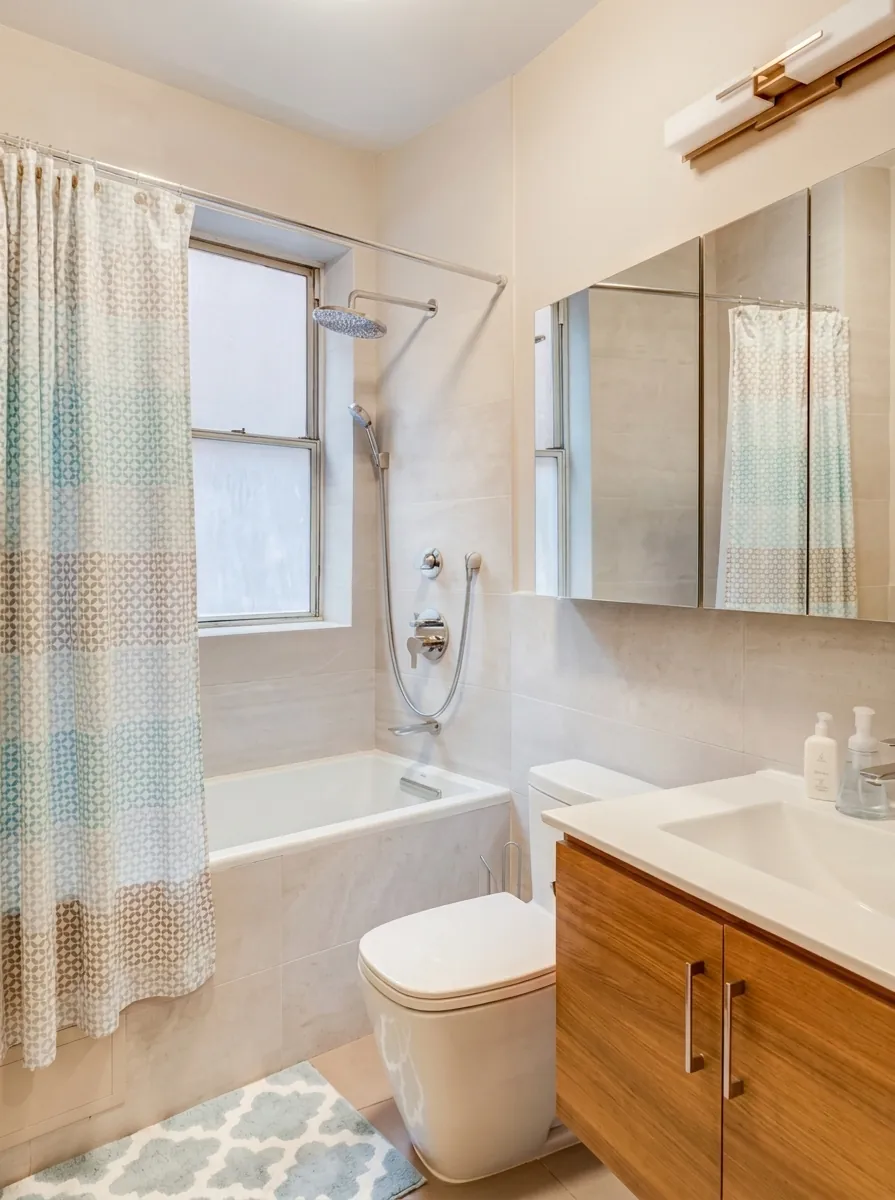
Tile is the single biggest design decision in any bathroom renovation, and in New York City it is also the decision with the most logistical consequences. The right tile elevates an entire space, holds up under decades of daily use, and works with — not against — the realities of your building. The wrong tile can mean cracked grout in a year, a delivery that will not fit in the elevator, or a slippery wet-room floor that fails inspection. This guide walks through everything we consider when helping NYC homeowners select bathroom tile, from material science to the practical limits of getting it into your apartment in the first place.
Porcelain vs. Ceramic vs. Natural Stone
Three material categories cover the vast majority of NYC bathroom installations, and each has a distinct set of strengths.
Porcelain is the workhorse of modern bathroom design. It is denser than ceramic — fired at higher temperatures with a finer clay body — which gives it lower water absorption (under 0.5%), excellent stain resistance, and the durability to handle the wet environment of an NYC bathroom for decades. Porcelain is also remarkable in how convincingly it can mimic other materials. The large-format porcelain slabs we routinely install for clients replicate Calacatta marble, travertine, or weathered concrete with such fidelity that even close inspection rarely gives them away.
Ceramic is softer, more porous, and significantly less expensive. It is still a perfectly valid choice for wall applications and lower-traffic powder rooms, particularly when the design calls for handmade or zellige-style tiles whose imperfections are the entire point. We do not recommend ceramic for shower floors or wet-room floors in NYC, where the higher water absorption and lower hardness can lead to staining and chipping.
Natural stone — marble, limestone, travertine, slate — brings a depth and patina that no manufactured tile can truly replicate. The trade-off is maintenance. In NYC's hard-water environment, calcium buildup is aggressive on stone, and natural stone requires periodic sealing (typically every 12 to 18 months) to prevent staining from soaps and shampoos. Honed marble in particular shows etching from acidic substances quickly. If you love the look of stone but want lower maintenance, porcelain slabs offer most of the visual reward with none of the ongoing care.
Format Sizes and Building Access
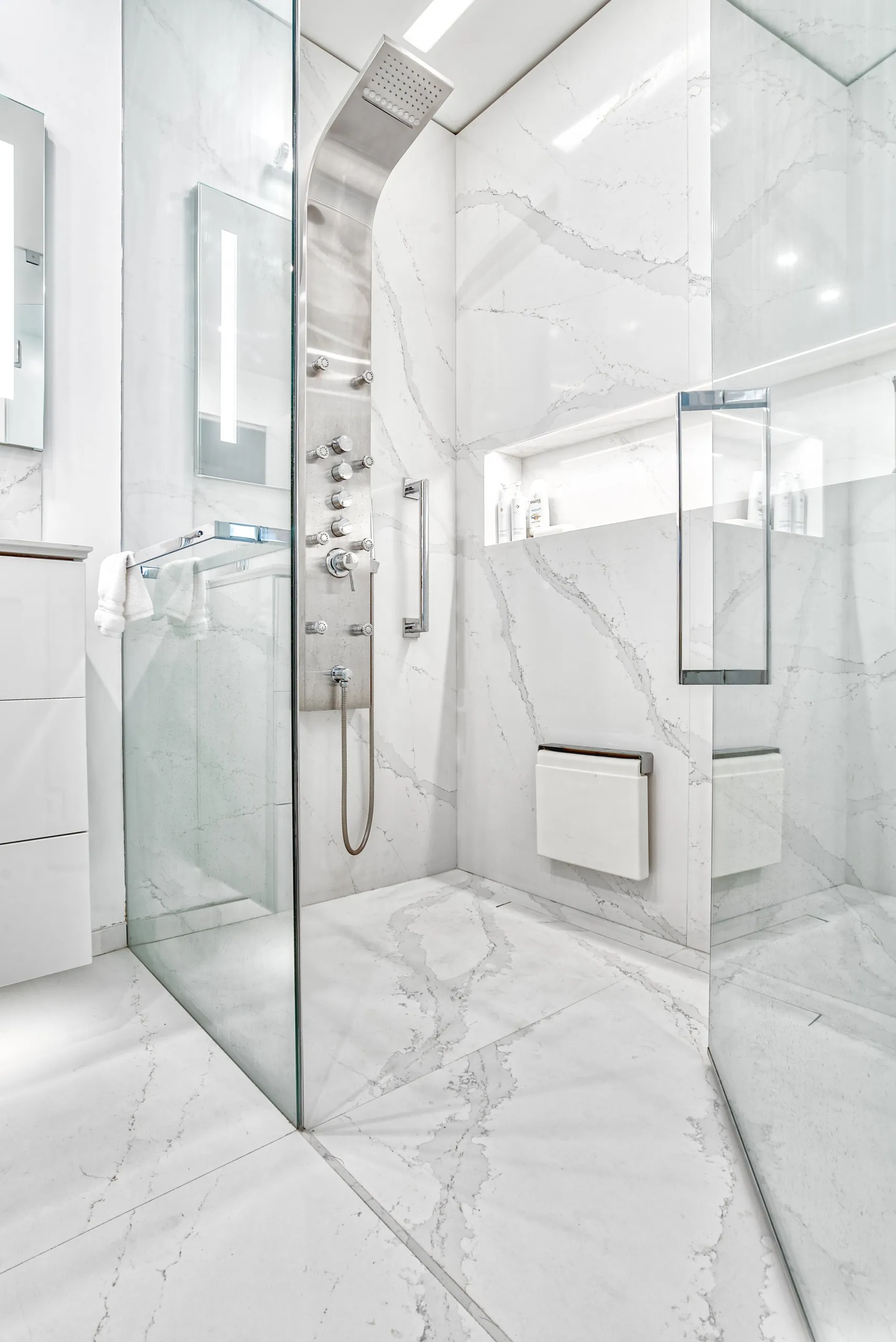
Large-format tile (24-by-48 inches and larger) has dominated NYC bathroom renovations for the last several years, and for good reason: fewer grout lines mean a cleaner, more expansive look in bathrooms that average under 50 square feet. But the largest formats come with a question that needs to be answered before anything is ordered: can the tile physically reach the apartment?
Many older NYC buildings — especially prewar co-ops on the Upper West Side, Upper East Side, and in Brooklyn Heights — have service elevators with internal dimensions under five feet. A 48-by-48 inch tile is just over four feet on its longest side, which means diagonal loading and very careful handling. Buildings without service elevators may require carrying the tile up a service stairwell, where landings and turns can disqualify the largest formats entirely.
We measure access points — building entry, service elevator interior, hallway turns, and apartment doorway — before any large-format material is ordered. If the dimensions are tight, we drop down a size or use porcelain slabs that can be cut to fit on site. Either approach preserves the seamless look without risking a damaged tile during delivery.
Slip Resistance and Wet-Room Considerations
The single most important spec for any bathroom floor tile in NYC is its slip-resistance rating, expressed as a Dynamic Coefficient of Friction (DCOF) value. The current standard recommends a DCOF of at least 0.42 for level wet floors, and most major tile manufacturers publish this number on their spec sheets.
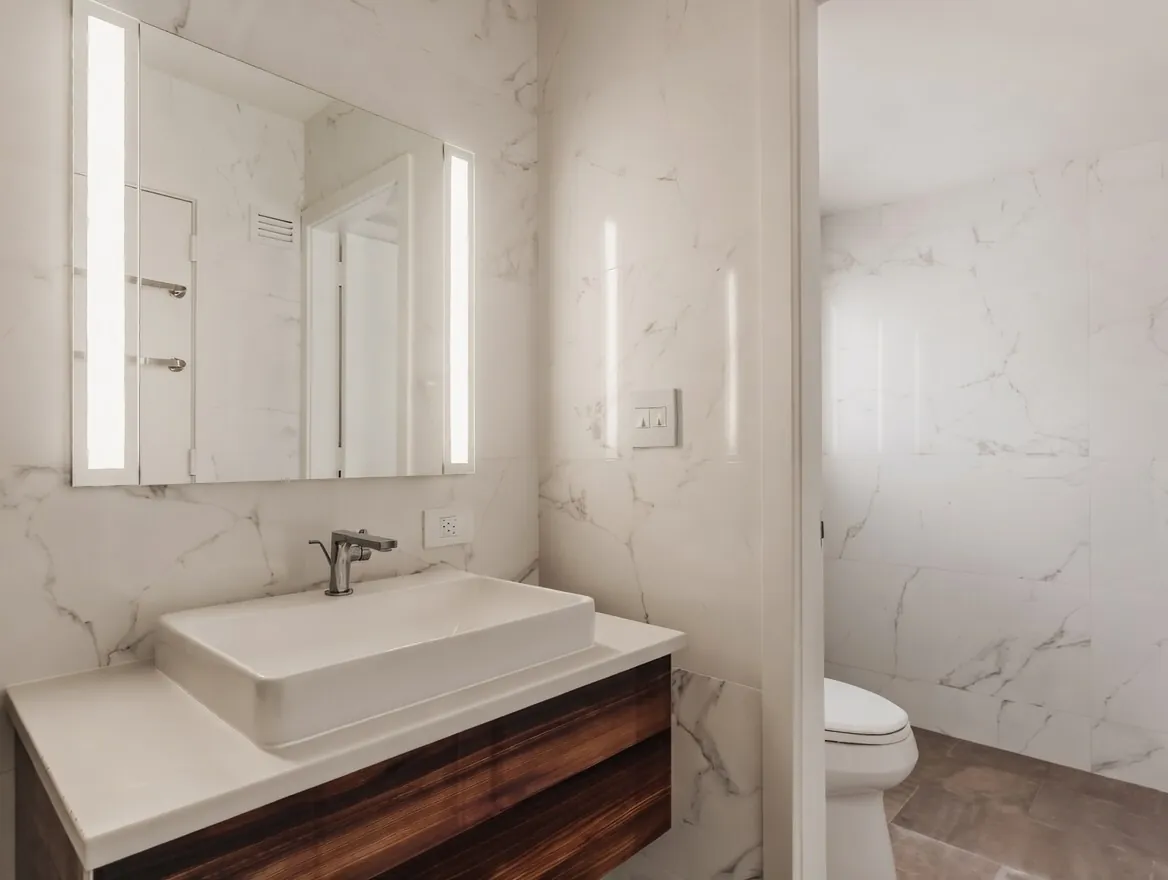
For wet rooms — the curbless shower designs that have become increasingly popular in NYC primary bathrooms — slip resistance is not just a comfort issue. Building codes treat wet rooms as continuously wet floor areas, and the tile must be selected accordingly. Polished porcelain or marble looks beautiful in photographs but is genuinely dangerous on a wet floor. We specify honed or matte finishes for any horizontal wet surface and reserve polished finishes for vertical applications and dry zones.
Smaller mosaic tiles — 2-by-2 inch or smaller — are an excellent choice for shower pans because the additional grout lines provide natural traction, and the smaller tile pieces conform easily to the slope of the floor toward the drain.
Grout, Setting Materials, and Long-Term Performance
The tile itself often gets all the attention, but grout and setting materials determine whether your bathroom looks great in five years or shows hairline cracks and discoloration. In an NYC apartment building, where a leaky bathroom can damage units below and generate insurance claims, this is not an area where corners should be cut.
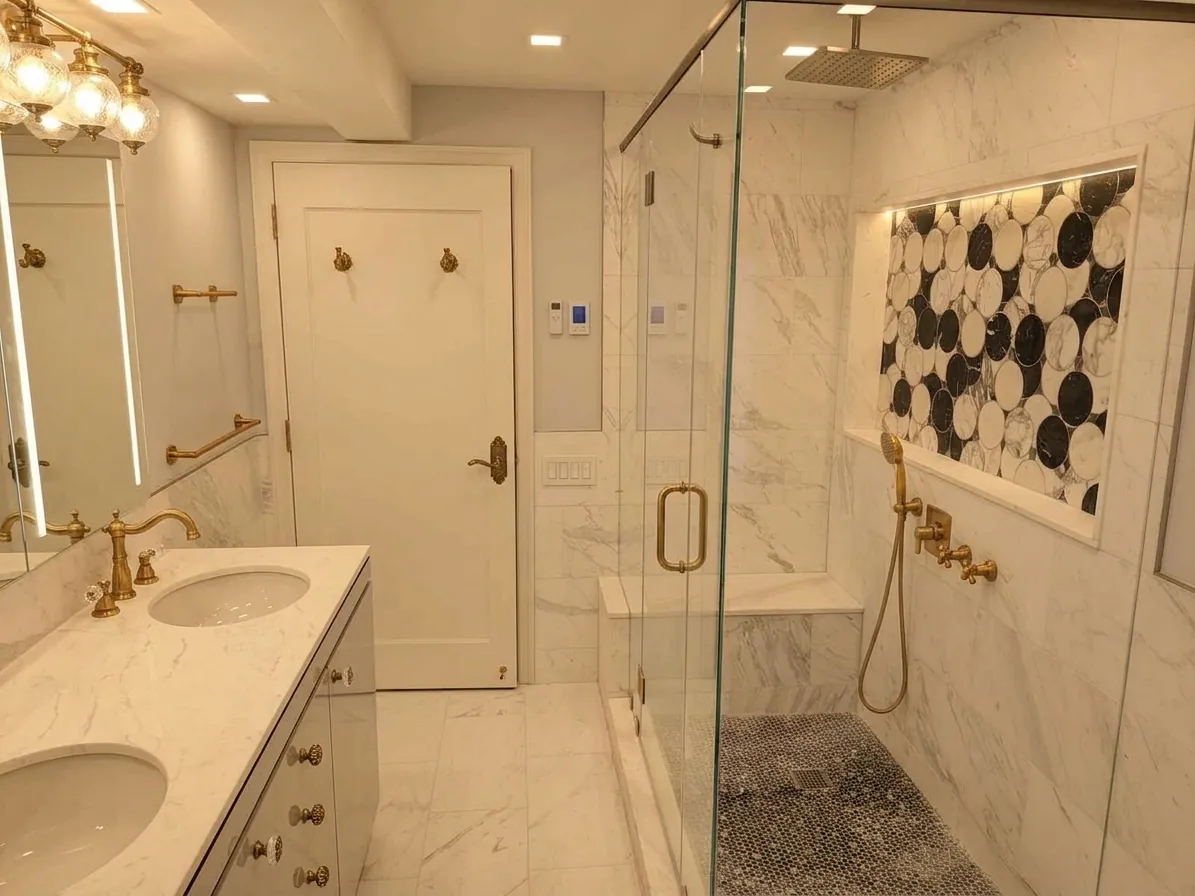
We use polymer-modified thinset for all tile installations and epoxy or urethane grout for shower walls, pans, and any high-moisture zone. Epoxy grout costs more and requires a more experienced installer, but it is essentially impervious to water and stain absorption — a meaningful advantage in a bathroom that will be used daily for the next 15 to 20 years.
Movement joints — small flexible silicone joints at the intersections of walls, floors, and any change of plane — are another detail that distinguishes a renovation done right. NYC buildings move. They settle, they expand and contract with temperature, and they vibrate from subway tunnels and traffic. Properly placed movement joints accommodate this motion and prevent the cracked grout that is the most common visible failure in a poorly executed bathroom.
Budget Ranges and Where to Spend
Tile budgets in NYC bathroom renovations vary widely, and most of the variation comes from material selection rather than installation cost. As a rough guide for a typical 40 to 50 square foot Manhattan bathroom:
Porcelain (mid-range to high-end): $8 to $25 per square foot for materials. This is where most of our clients land, and it covers an enormous range of designs from understated modern to convincing marble look-alikes.
Natural stone: $15 to $60+ per square foot for materials. Calacatta and other premium marbles can easily exceed $100 per square foot for slabs.
Mosaics and accent tile: Often priced per sheet rather than per square foot, with handmade and glass mosaics ranging from $20 to $80+ per square foot.
Our consistent advice: spend on the visible surfaces — the shower walls, the feature wall, the floor — and save on the niches and utility zones. A beautifully tiled shower with a simple matching floor reads as more cohesive and expensive than a bathroom that tries to do everything everywhere.
Working With Your Building
Most NYC co-ops and many condos require an alteration agreement before any tile work can begin. The agreement typically specifies acceptable working hours (usually 9 AM to 5 PM, weekdays only), requires proof of insurance from all contractors, and may require pre-approval of waterproofing systems. Some buildings require a licensed plumber to perform a flood test of the new shower pan before tile is installed, with the building's superintendent or managing agent present to witness.
We handle the alteration agreement process for our clients and coordinate directly with building management throughout the project. This relationship matters: a contractor who has worked in your building before — or in similar prewar buildings with similar requirements — moves through approvals significantly faster than one who is learning the building's quirks for the first time.
Choosing With Confidence
The best bathroom tile selection comes from understanding your building, your daily routine, and what you actually want the finished space to feel like. A tile that performs beautifully in a new condo tower may be the wrong choice for a 1922 co-op with a slow service elevator, and a stone that looks stunning in a showroom may be more maintenance than you actually want to take on.
At Knockout Renovation, we have specified and installed tile in bathrooms across Manhattan and Brooklyn for over 30 years. We know which products are reliably available, which manufacturers back their materials, and how to make the most of the constraints every NYC bathroom comes with. If you are considering a bathroom renovation and want a partner who can guide the tile selection from first showroom visit through final installation, we would love to help.