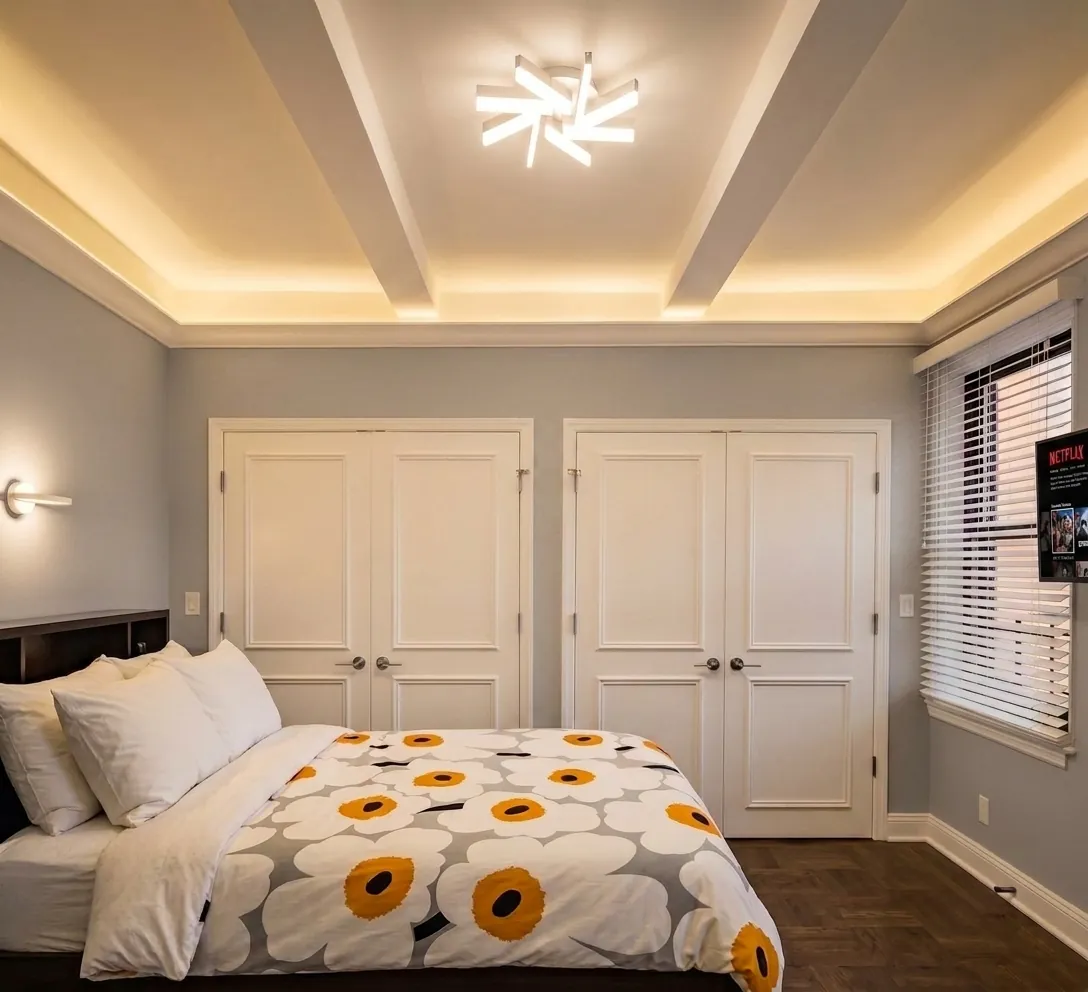
Master bedroom renovations are sometimes treated as the small, easy projects of an NYC apartment remodel — the spaces that get a coat of paint and new flooring while the kitchen and bathrooms get the attention. That is a missed opportunity. The bedroom is where you spend roughly a third of your life, and a thoughtful bedroom renovation can deliver a level of daily comfort, functionality, and quiet that genuinely changes how the apartment feels. This guide covers what we have learned from designing and building master bedrooms across Manhattan and Brooklyn for over 30 years.
Built-In Storage: The Single Highest-Value Move
The single most impactful change in most NYC bedroom renovations is replacing freestanding furniture with built-in storage. Wardrobes, dressers, and bookcases that sit on the floor consume significant square footage, leave dead space behind and around them, and rarely match the room's proportions. Floor-to-ceiling built-ins reclaim that space, integrate cleanly with the architecture, and dramatically increase usable storage capacity.
A typical Manhattan bedroom that is 12 by 14 feet often has 8 to 10 linear feet of wall available for built-in millwork along the wall opposite or perpendicular to the bed. A custom built-in system in that space can include hanging space for clothing, drawers, shelving for books and accessories, a dedicated section for TV and electronics, and dedicated lighting — all in the footprint that a single dresser used to occupy.
Material selection matters significantly. Painted MDF and wood veneers in matching paint or stain finish work best for built-ins meant to read as part of the architecture. Solid wood is heavier, more expensive, and prone to seasonal movement — generally unnecessary for cabinet-style millwork. For an upscale finish, we use felt-lined drawers, soft-close hardware, integrated LED lighting, and concealed hinges.
Walk-In Closet Design in Tight Spaces
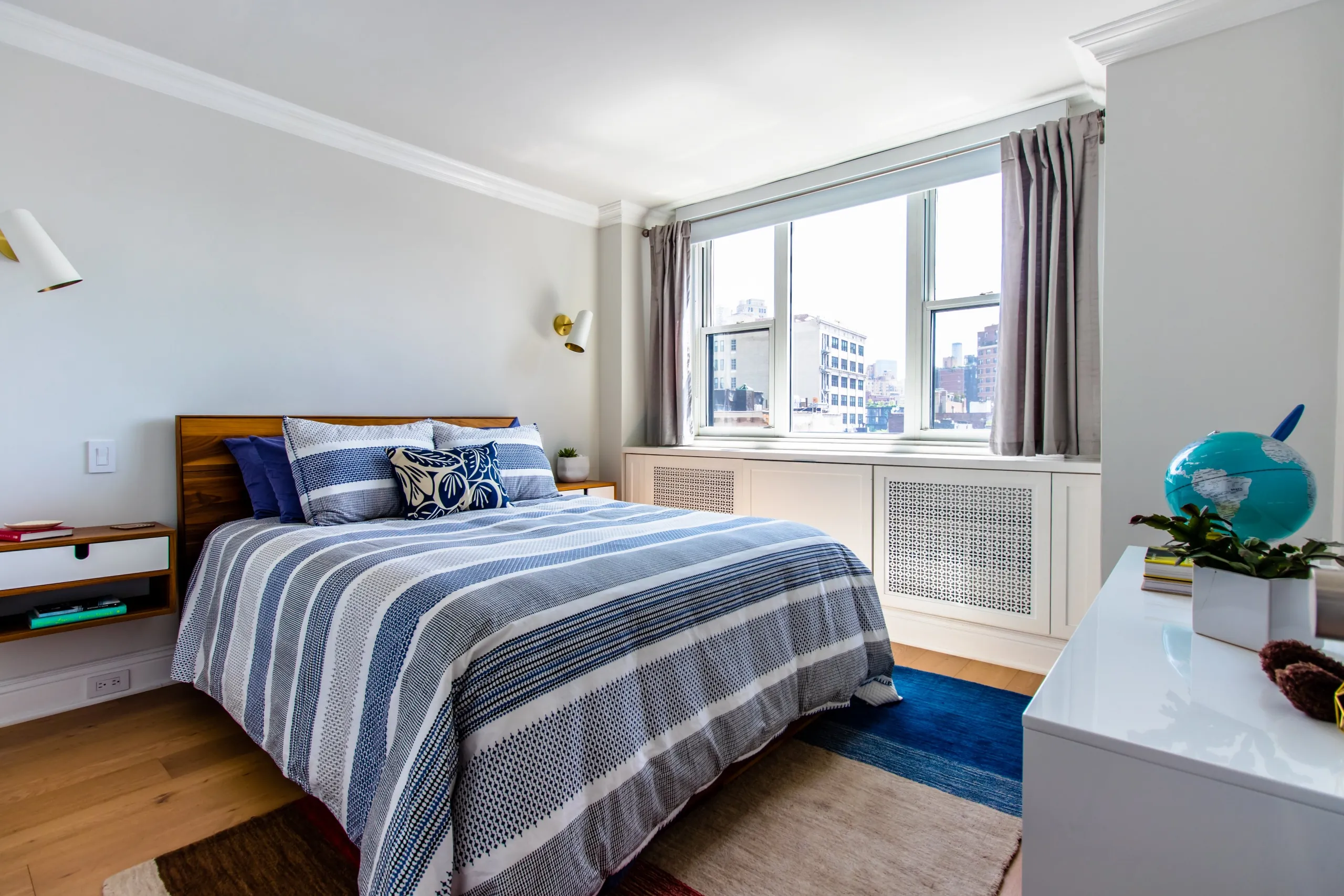
The walk-in closet is one of the most consistently requested additions in NYC bedroom renovations, and one of the most space-constrained design challenges. A useful walk-in closet requires at minimum a 5-by-7 foot footprint, with 4 feet of clear circulation between hanging zones. In many NYC bedrooms, this is more space than is available, and the better answer is a generous reach-in closet rather than a forced walk-in that compromises the bedroom proportions.
When a walk-in closet is feasible, the most common approach is to take square footage from an oversized bedroom or steal a portion of an adjacent room (often a small home office or a hallway). The trade-off is always worth examining: does the walk-in closet add more value than the square footage it removes from the bedroom?
Within the closet, we typically design with three zones: double-hung sections for shirts and folded items above shorter hanging, single-hung sections for dresses and longer pieces, and a drawer-and-shelf zone for folded clothes and accessories. Shoe storage gets dedicated space — angled shelves or pull-out racks — and there is always room for a hamper. Lighting throughout, with motion sensors that activate when you enter, makes the closet genuinely pleasant to use.
For reach-in closets, sliding doors are often preferable to swinging doors because they preserve circulation space in front of the closet. Frameless mirrored sliders bounce light around the bedroom and visually expand the space. Where door hardware really matters — a primary suite where the closet is a focal point — we often use full-height swing doors with flush detailing that looks like an integrated panel rather than a closet door.
Layered Lighting for Bedroom Use
Bedroom lighting requirements are different from other rooms because the same space serves multiple modes: reading in bed, getting dressed, watching TV, sleeping. A single overhead fixture cannot do all of these well. Successful bedroom lighting is layered with multiple independent circuits.
Ambient lighting: Soft, diffuse light for general illumination. Recessed downlights work well, especially with deep baffles to reduce glare from below. We typically space downlights more sparsely in bedrooms than in kitchens or living rooms — the goal is comfortable light, not maximum brightness.
Bedside reading lights: Wall-mounted swing-arm sconces or small pendants are our usual recommendation. They free up nightstand surface area and can be positioned for direct reading light without spilling onto the side of the bed where your partner is trying to sleep.
Closet and dressing area lighting: Bright, accurate-color light for getting dressed and seeing what clothes actually look like before leaving the apartment. Color-temperature-tunable LEDs (Lutron, Lutron Diva, Ketra) can shift from warm evening light to crisper morning light automatically.
Accent lighting: A picture light over a piece of art, or LED tape behind a headboard, adds the visual interest that makes a bedroom feel finished rather than just functional.
All lighting should be on dimmers — every circuit, no exceptions. The bedroom is the room where lighting flexibility matters most, and dimmers cost very little when included during construction.
Sound Insulation: The Underrated Upgrade
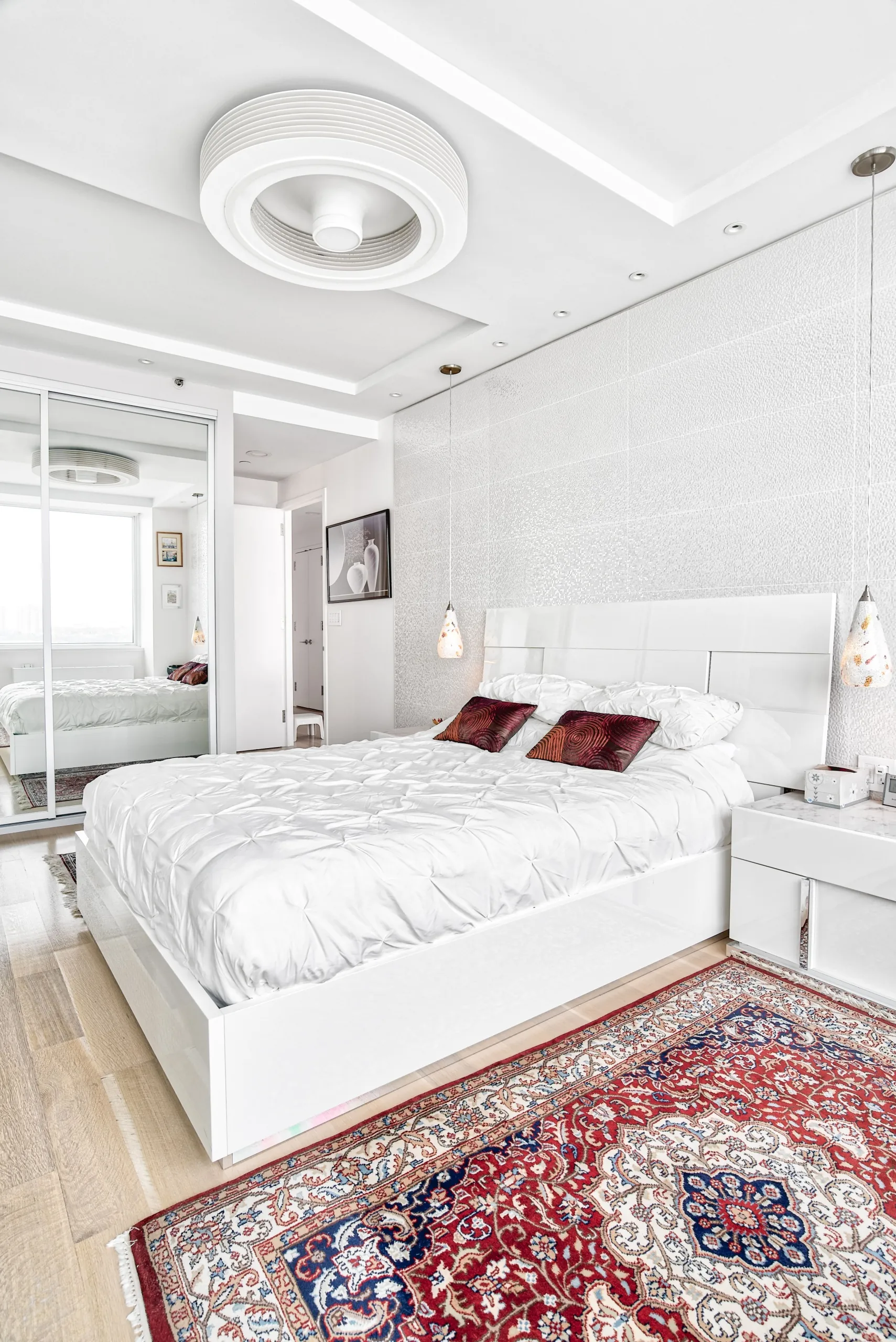
Manhattan bedrooms share walls, floors, and ceilings with neighbors who have their own schedules, music preferences, and sometimes overactive children. Bedroom sound insulation is among the highest-value upgrades available in an NYC renovation, and it is much easier to do during a renovation than to retrofit later.
Wall sound insulation: Adding a layer of sound-attenuating drywall (QuietRock or similar) to existing walls, with green glue or dampening compound between layers, can reduce transmitted noise by 10 to 15 decibels — the difference between hearing a neighbor's TV clearly and barely noticing it. For walls that are being opened up anyway during a renovation, proper acoustic batt insulation (Roxul Safe'n'Sound or similar mineral wool) inside the wall cavity adds further benefit.
Floor sound insulation: For hardwood floors over a residential neighbor below, a quality acoustic underlayment (Acoustik 1.6, QuietWalk Plus, or similar resilient mat) reduces both impact noise (footsteps) and airborne noise transmission. Many co-op buildings require a minimum impact rating for any new flooring, and the underlayment specification needs to comply with the building's standards.
Ceiling and HVAC sound: Quiet bathroom fans (under 1 sone) and properly insulated mechanical ducts prevent the bedroom from being interrupted by mechanical noise. Solid-core doors (rather than hollow-core) significantly reduce sound transmission from hallways and the rest of the apartment.
Bedroom Conversions in Classic NYC Layouts
Many NYC apartment renovations include some form of bedroom conversion: turning an alcove studio into a one-bedroom, converting a classic-six to a classic-seven by walling off a portion of a large room, or repurposing a maid's room as a home office or guest bedroom. Each of these conversions has specific requirements that go beyond just adding walls.
For a legal bedroom in NYC, the room must have:
A window providing natural light and ventilation, sized proportionally to the room (typically at least 1/8 of the floor area for window glazing). A minimum floor area — generally 80 square feet for a single-occupant bedroom under the NYC Multiple Dwelling Law. A means of egress to the unit exit, usually through a hallway or directly to the apartment's main living area. Adequate electrical service for bedroom use (lighting, outlets, increasingly USB and AV connections).
Many alcove conversions and partial-wall additions do not create technically legal bedrooms because they lack a window or proper ventilation, but they can still create useful private spaces. We are clear with clients about what each modification will accomplish from a code perspective and what it will mean for resale.
Working Within Co-Op and Condo Constraints
Most NYC apartments are subject to building rules that affect bedroom renovations even when no walls are being moved. Common requirements include:
Minimum floor underlayment ratings for any new hardwood or hard-surface flooring. Restrictions on weekend or evening construction hours. Approved working hours for noisy work (drilling, sanding) that may differ from general construction hours. Required floor coverage percentages — many buildings require 80% rug coverage in living areas, which can affect how new hard floors are framed in a bedroom.
We coordinate all of this through the alteration agreement process and ensure that the final design and specification package complies with the building's rules before any work begins.
Putting It All Together
A well-designed master bedroom renovation in Manhattan typically addresses storage, lighting, sound, and layout simultaneously. The result is a bedroom that does not just look good in photographs but actually performs as a quiet, comfortable, organized space every day. The relative cost of doing it well — compared to the daily benefit over the years you will live in the apartment — is usually a strong argument for getting the bedroom right rather than treating it as an afterthought.
At Knockout Renovation, we have designed and built master bedrooms across Manhattan and Brooklyn for over 30 years, from compact one-bedrooms to full-floor primary suites. If you are considering a bedroom renovation as part of a larger apartment remodel, or as a standalone project, we would love to help you think through what is possible in your specific space.